January 19th, 2026
FlowGenie now has its first official “integrations”, including Google Sheets, Slack, and Notion.
While you could have always used the fetch node and environment variables to make request to any API, integrations provides a few advantages. For one, some services only allow getting API keys via an OAuth flow. Also, using integrations make it so that you don’t have to setup the apps in these services yourself.
Connecting to an integration
To connect an integration, go to the “Integrations” page and click “Connect” on the one you want to use. You may have to sign in, authorize FlowGenie, and/or select the pages you want FlowGenie to have access to.
Using an integration
Once connected, you can use the Get Access Token node in the flow editor. This node has a dropdown that allows you to select one of the integrations, and it outputs the access token. One of these nodes can be read multiple times.

Typically, access tokens are provided to an Authorization header in the format of Bearer xxxxxxxx where the xxxx is your access token:

Integration Flows
While you could build your own fetch call like in the image above, there are also a few published flows that work with these integrations, such as “Slack - Post Message”. Many more of these flows, and integrations to come!
January 11th, 2026
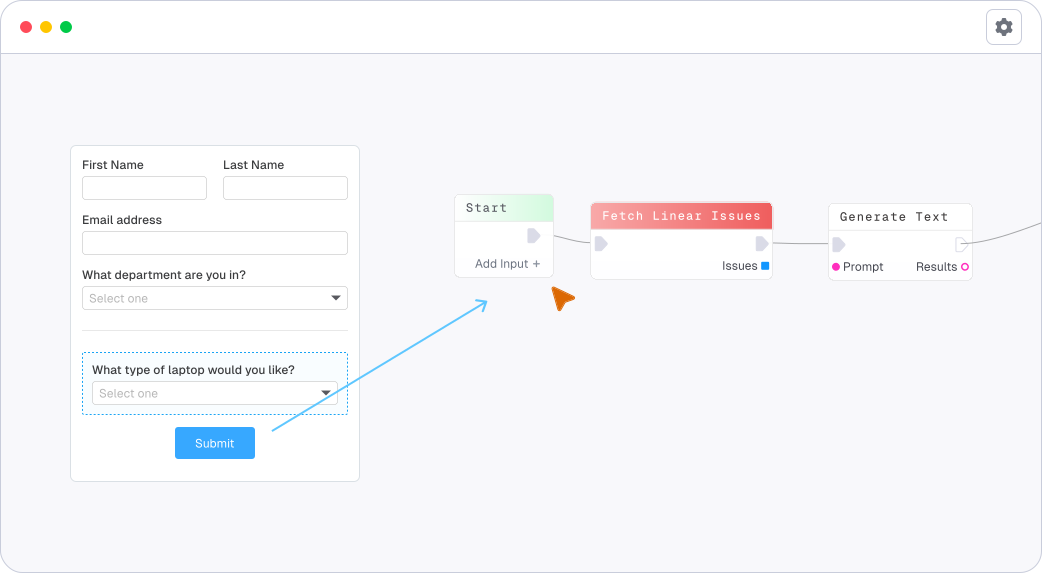
FlowGenie is officially out! This release introduces the core building blocks of the platform: Flows and Forms.
Flows let you design logic visually. You connect steps together to define how data moves, decisions are made, and actions are executed…all without code! Think of flows as functions in programming languages.
Forms let you build forms… With all the standard question types you would expect, plus the ability to use Flows for validation, fetch the options for multi-choice questions, or to do something with the data on submission.
Pricing
Pricing for FlowGenie has now been defined.
That said, pricing may change as the product evolves, features expand, and usage patterns become clearer. Early pricing reflects the current scope of the platform, not a long-term guarantee.
If pricing changes, it will be communicated clearly and in advance.